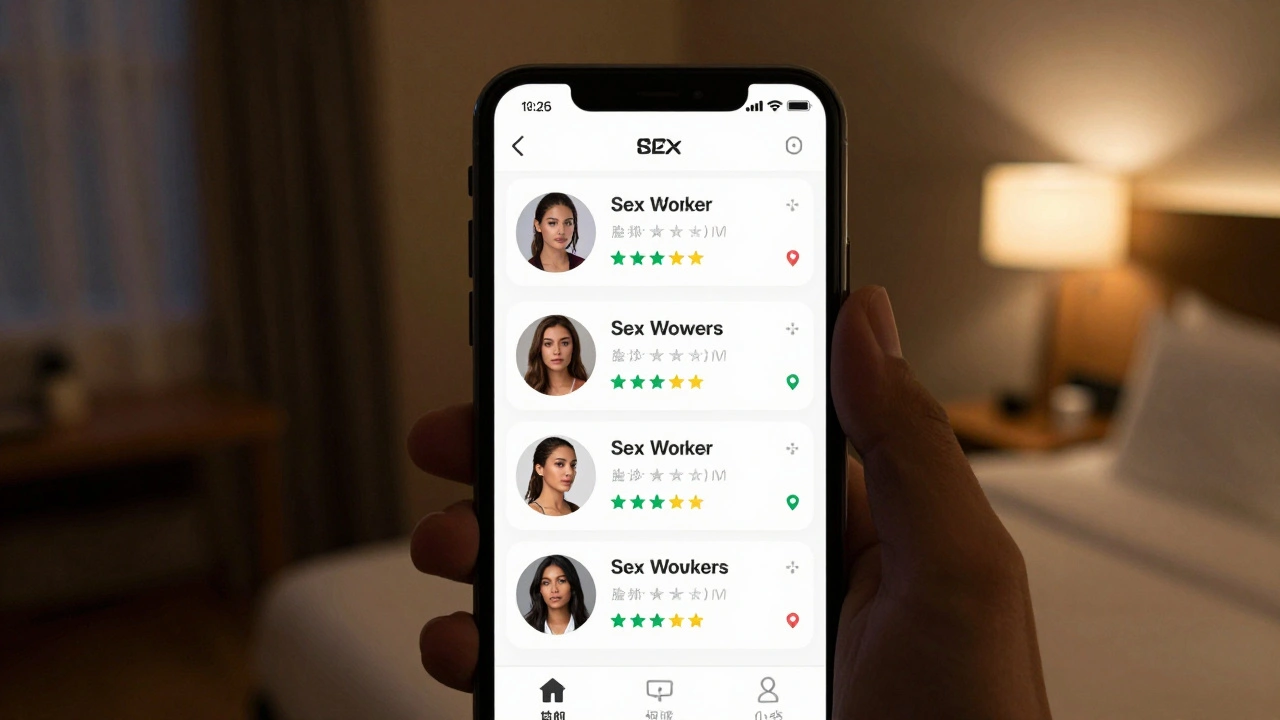
You type "prostitute near me" into your phone. You hit search. A map pops up. Pin after pin. Names. Photos. Prices. Availability. It’s not magic. It’s not mystery. It’s just an app-like Uber, but for intimacy. And it’s changing everything.
What’s Really Happening Here?
For decades, sex work happened in back alleys, motel rooms, and whispered conversations. Now? It’s happening on your screen. Apps like OnlyFans, a platform that lets sex workers build direct subscriber relationships, bypassing middlemen and controlling their own pricing, Feeld, a dating app designed for ethical non-monogamy and adult connections, now used by many independent sex workers to screen clients, and even custom-built platforms like MySexting, a niche service focused on discreet, app-based encounters with verified profiles have turned what was once hidden into something structured, searchable, and surprisingly transparent.
You’re not just looking for a person anymore. You’re comparing profiles like you would for a hotel. Reviews. Availability. Rates. Background checks. Some workers even post their own safety protocols. It’s not perfect. But it’s real. And it’s here to stay.
Key Takeaways
- Apps have shifted sex work from street-based to digital-first, reducing violence and increasing control for workers.
- Workers now set their own prices, choose clients, and manage schedules-something rarely possible before.
- Client safety has improved through verified profiles, reviews, and communication tools built into the apps.
- Legality hasn’t changed-but how services are offered has. Many platforms operate in legal gray zones, not outright illegality.
- Search terms like "prostitute near me" now lead to curated, filtered, and often safer options than random street encounters.
How Apps Are Changing the Game
Before apps, if you wanted to find someone for sex, you had to rely on word of mouth, flyers, or shady websites with no verification. You didn’t know who you were meeting. You didn’t know if they were safe. You didn’t know if they’d show up.
Now? You open an app. You filter by location, price, services offered, language spoken, even height and hair color. You read reviews from other clients. You message them first. You agree on terms. You meet at a pre-selected location-often a hotel chosen by the worker, not a random room.
This isn’t just convenience. It’s safety. A 2023 study by the Global Network of Sex Work Projects, an international coalition advocating for the rights of sex workers found that workers using apps reported a 68% drop in violent incidents compared to those working on the street. Why? Because they screen clients. They control the environment. They don’t have to take risks just to survive.
And it’s not just workers. Clients benefit too. No more guessing. No more scams. You know what you’re paying for. You know who you’re meeting. You know the rules ahead of time.
What Types of Services Are Available?
Apps don’t just offer one thing. They offer choices. Here’s what you’ll typically find:
- Companionship-only - Dinner, drinks, conversation. No sex. Often priced lower. Popular with people seeking emotional connection.
- Full-service encounters - Includes sexual contact. These are the most common listings, with clear descriptions of what’s included.
- Virtual sessions - Webcam, phone calls, sexting. No in-person meeting. Increasingly popular, especially among those who want privacy or live far away.
- Specialized services - Roleplay, fetish work, massage with erotic elements. These are clearly labeled, with consent and boundaries upfront.
Workers list exactly what they offer. No guesswork. No surprises. If a service isn’t listed, it’s not offered. That’s the new standard.

How to Find Services Near You
Here’s how it actually works in 2026:
- Open an app like Feeld, OnlyFans, or a local platform like MySexting (popular in the U.S. and parts of Europe).
- Use the location filter. Set it to your city or neighborhood. Some apps let you search within a 5-mile radius.
- Sort by price, rating, or availability. Many workers update their status in real time.
- Read the profile. Look for photos (verified ones often have a badge), reviews, and service descriptions.
- Message them first. Most apps have built-in chat. Ask questions. Confirm availability. Agree on location and rules.
- Meet in public, safe spaces. Most workers choose hotels with 24/7 security. Never agree to go to a private home unless you’re certain.
Pro tip: Avoid platforms that don’t allow messaging. If you can’t talk to the person before meeting, walk away. Safety starts with communication.
What to Expect During a Session
It’s not Hollywood. It’s not a fantasy. It’s real life.
You’ll likely meet in a hotel room. The worker will arrive on time. They’ll confirm your identity. They’ll ask if you’ve read their rules. They’ll explain what’s included and what’s not. You’ll both agree on boundaries. No pressure. No surprises.
Most sessions last 60 to 90 minutes. Some are shorter. Some are longer. Payment is usually cash or digital (Venmo, PayPal, crypto). No tipping culture. Everything is agreed on upfront.
After? You leave. No lingering. No drama. The worker has another appointment. You go home. That’s it.
It’s transactional. But it’s also human. People aren’t just bodies on a screen. They’re individuals with schedules, boundaries, and reasons for doing this work.
Pricing and Booking
Prices vary wildly. In a big city like London or New York, you might pay $150-$300 for an hour. In smaller towns? $80-$150. Virtual sessions? $20-$60 for a 30-minute call.
Workers set their own rates. No pimp. No agency. No cut. They keep 100%. That’s why many now earn more than they did in traditional jobs.
Booking is simple. Message. Confirm. Pay. Show up. Most apps have calendar systems built in. Workers block out time. You book. They confirm. Done.
Warning: If someone asks for payment upfront before meeting, that’s a red flag. Legit workers don’t take money before the session. They might ask for a deposit to hold a time slot-but only if it’s refundable.

Safety Tips You Can’t Ignore
This isn’t a game. There are risks. Here’s how to stay safe:
- Never meet in a private home - Even if they say it’s "cozy." Hotels with security are the standard.
- Share your location - Text a friend your meeting spot and expected return time.
- Check reviews - Look for patterns. If three people say "they were rude," pay attention.
- Use app chat only - Don’t move to WhatsApp or Signal too early. Apps log messages. That’s your protection.
- Trust your gut - If something feels off, leave. No apology needed.
- Know your rights - In many places, sex work between consenting adults is decriminalized. You’re not breaking the law by seeking it.
Comparison: App-Based Sex Work vs. Street-Based
| Factor | App-Based | Street-Based |
|---|---|---|
| Client Screening | Yes - profiles, reviews, messaging | No - random, no info |
| Location Control | Worker chooses safe, public space | Often unsafe, isolated areas |
| Pricing | Fixed, transparent, set by worker | Negotiated on the spot, often lower |
| Safety | 68% lower violence (GSWP 2023) | High risk of assault, robbery |
| Privacy | High - discreet communication | Low - visible, public exposure |
| Income | Workers keep 100% | Often forced to share with pimps |
Frequently Asked Questions
Is it legal to use these apps to find sex workers?
Laws vary by country and city. In places like the Netherlands, New Zealand, and parts of Germany, sex work is fully legal and regulated. In the U.S., it’s illegal in most states-but enforcement is inconsistent. Many apps operate in legal gray zones. You’re not breaking the law by searching or messaging. But paying for sex in a place where it’s criminalized can carry penalties. Always check local laws before acting.
Can I get arrested for using these apps?
It’s possible, but unlikely if you’re just browsing or messaging. Law enforcement typically targets operators, not clients. That said, in areas with strict anti-prostitution laws, even showing up at a meeting could lead to questioning. If you’re concerned, avoid public places where police surveillance is common. Stick to hotels with security cameras and front desk logs.
Why do workers use apps instead of working on the street?
Because they can. Apps give them control. They set their own hours. They choose who they work with. They earn more. They avoid violence. They don’t need pimps or managers. Many workers say it’s the first time they’ve ever felt safe and respected in this work. It’s not about glamour-it’s about survival and dignity.
Are these apps safe from scams?
Most reputable apps have verification systems. Look for profile badges, real photos, and reviews from multiple users. Avoid anyone who asks for money upfront, refuses to message, or pressures you. Scams exist-but they’re rare on well-moderated platforms. Stick to apps with active moderation and user reporting tools.
Do these apps track me?
Yes, but not the way you think. Apps track usage for security and moderation-not to expose you. Your location is only used to match you with nearby workers. Your messages are encrypted. Your payment info is handled by third parties. If you’re worried, use a burner phone or private Wi-Fi. Don’t use your main device. It’s not paranoia-it’s precaution.
What Comes Next?
The shift isn’t slowing down. AI chatbots are being used to screen clients. Biometric verification is being tested. Some workers now use blockchain to store reviews. Others are building their own apps. The future of sex work isn’t hidden. It’s digital. It’s organized. And it’s giving power back to the people doing the work.
If you’re curious, start with curiosity-not desperation. Read profiles. Ask questions. Respect boundaries. Stay safe. And remember: behind every profile is a person. Not a fantasy. Not a commodity. Just someone trying to make a living on their own terms.