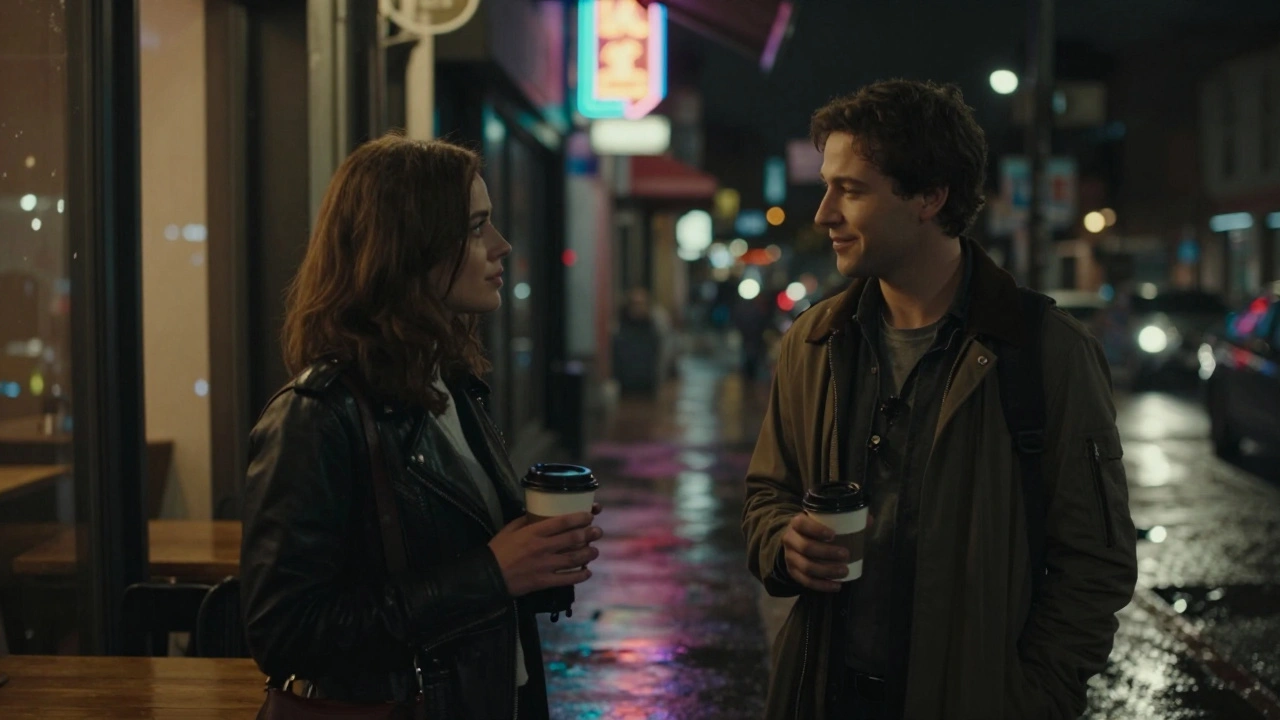
You’ve probably thought about it. Maybe you saw it in a movie, heard a friend talk about it, or just felt that urge after a long week. A one-night stand isn’t some wild, mysterious ritual-it’s just two people agreeing to be intimate for one night, with no strings attached. Sounds simple, right? But if you’ve never done it before, it’s easy to feel lost. What do you say? How do you stay safe? What happens the next morning?
What Exactly Is a One-Night Stand?
A one-night stand is a consensual sexual encounter between two people who don’t plan to see each other again. It’s not dating. It’s not a relationship. It’s not even really a hookup in the modern sense-those often come with texting, DMs, or vague plans for coffee. A one-night stand ends when the night does. No follow-up. No expectations. Just mutual understanding.
It’s not about loneliness. It’s not about revenge. It’s not about proving something to yourself or someone else. At its core, it’s about physical connection without emotional obligation. And yes, that’s okay-if you’re clear-headed about it.
Why People Do It (And Why You Might Too)
People have one-night stands for all kinds of reasons. Some want to explore their sexuality. Others are traveling and feel free to act differently than they would at home. Some are just tired of dating apps and want something straightforward. A few are healing from a breakup and need to feel desired again.
Here’s the truth: if you’re doing it because you’re lonely, angry, or trying to fill a void, it rarely ends well. You might feel good in the moment, but the emptiness comes back faster than you think. But if you’re doing it because you’re curious, confident, and fully aware of what you’re getting into? That’s different. That’s intentional.
How to Do It Safely
Safety isn’t just about condoms. It’s about your whole experience.
- Meet in public first. Even if you’ve been chatting for days, meet for a drink or coffee before going back to someone’s place. Watch how they act. Do they respect your boundaries? Do they seem calm, or are they overly eager, pushy, or erratic?
- Use protection-every time. Condoms aren’t optional. Get tested regularly. If you’re on PrEP, great. If not, ask your doctor about it. STIs don’t care how confident you are.
- Don’t share personal info. Your last name, job, where you live-none of that needs to come up. Use a first name only. You don’t owe them your life story.
- Have a plan to get home. Never rely on your partner to drive you. Know your ride: Uber, a friend, your own car. If you’re out late, don’t be afraid to leave early.
- Trust your gut. If something feels off, leave. No explanation needed. Your safety matters more than being polite.

Where Do People Find One-Night Stands?
It’s not just bars and clubs anymore. Apps like Tinder, Bumble, and Hinge are common starting points. But here’s the catch: most people on those apps are looking for dates, not just sex. If you’re clear about your intentions from the start, you’ll filter out the wrong people faster.
Some people use adult-oriented apps like Feeld or AdultFriendFinder. These are more direct. You’ll find people who are upfront about wanting casual encounters. But even there, you still need to vet people. Don’t assume “casual” means “safe.”
Real talk: the best one-night stands often come from people you already know-someone you’ve flirted with at work, a friend of a friend, someone you’ve seen around. The advantage? You already have a sense of who they are. The downside? It can get messy if things go wrong. Proceed with care.
What Happens the Next Morning?
This is where most beginners get tripped up.
You wake up. They’re already up. There’s coffee. A quiet moment. Then comes the silence. What do you say? What do you do?
Here’s the rule: Don’t overthink it. If you both agreed it was just for one night, keep it light. A simple “Thanks for last night. I had a good time” is enough. No need to over-explain, apologize, or flirt. Don’t text them the next day unless you want to start something more.
And if they text you? Don’t panic. If you’re not interested, just say: “I’m not looking to keep things going. Hope you’re doing well.” That’s it. No guilt. No drama.
What to Avoid at All Costs
There are some traps you don’t want to fall into:
- Drinking too much. Alcohol lowers your judgment. If you’re blackout drunk, you’re not making a choice-you’re just reacting.
- Doing it because you’re pressured. No one should make you feel guilty for saying no. If someone gets upset when you set a boundary, walk away.
- Expecting it to turn into something more. If you start fantasizing about them, you’ve already crossed the line. One-night stands work only when you accept they’re temporary.
- Doing it to prove something. “I’m not like other girls,” “I’m brave,” “I’m over my ex”-none of that matters. This isn’t a performance. It’s your body, your choice.

One-Night Stand vs. Casual Dating
| Aspect | One-Night Stand | Casual Dating |
|---|---|---|
| Goal | Single sexual encounter | Regular intimacy without commitment |
| Communication | Minimal; no expectation of follow-up | Ongoing texting or meeting occasionally |
| Emotional Involvement | None expected | May develop, but not required |
| Frequency | One time only | Repeats over weeks or months |
| Boundaries | Clear and final | Often negotiated and flexible |
FAQ: Your Questions About One-Night Stands Answered
Is it normal to feel guilty after a one-night stand?
Guilt is common, especially if you were raised with strict views on sex. But guilt isn’t a sign you did something wrong-it’s a sign you’re human. Ask yourself: Did you consent? Did you protect yourself? Did you respect the other person? If yes, then there’s nothing to feel guilty about. Shame comes from society, not from your choices.
Can a one-night stand turn into a relationship?
Sometimes. But if you’re hoping it will, you’re not really doing a one-night stand-you’re doing a date with a loophole. If you start wanting to see them again, it’s okay to say so. But don’t pretend you didn’t mean it to be casual. Honesty prevents hurt later.
How do I know if I’m ready for a one-night stand?
You’re ready if you can say no without fear, if you know your boundaries, and if you’re not doing it to escape pain or loneliness. If you feel excited, not anxious-if you’re choosing it, not running into it-you’re probably ready.
What if someone talks about it afterward?
People talk. That’s life. But if someone shares your experience without your permission, that’s a violation. You have the right to privacy. If you’re worried about gossip, avoid people you know well or who have a reputation for being loud. And if someone does spread rumors? You don’t owe them an explanation. Just move on.
Are one-night stands unhealthy?
Not if they’re consensual, safe, and intentional. Studies show that people who engage in casual sex without guilt or shame report similar levels of life satisfaction as those in relationships. What matters isn’t the frequency-it’s your mindset. If you feel used, confused, or regretful, it’s not the act that’s the problem-it’s the mismatch between your expectations and reality.
Final Thought: It’s Your Body, Your Rules
One-night stands aren’t right for everyone. And that’s fine. But if you’re curious, don’t let fear or shame stop you from exploring. Just do it with your eyes open. Know your limits. Protect yourself. Communicate clearly. And above all-respect yourself enough to walk away if anything feels off.
Sex doesn’t have to be complicated. Sometimes, it’s just two people, one night, and nothing more. And sometimes, that’s exactly what you need.






10 Comments
Patrick MacKrell
Let’s be real-this guide reads like a corporate wellness pamphlet disguised as rebellion. One-night stands aren’t about ‘intentionality’ or ‘clear-headedness’-they’re about impulse, loneliness disguised as freedom, and the desperate hope that someone else’s body will make you feel less empty. You call it ‘no strings attached,’ but humans aren’t wired for that. We attach. Even when we swear we won’t.
antonio montana
Okay, but-really-did anyone actually read the safety section? I mean, meeting in public first? Using protection every time? Trusting your gut? These aren’t suggestions-they’re lifelines. And yet, so many people skip them because they think they’re ‘different.’ Spoiler: you’re not. Stay safe, people. Seriously.
Parul Singh
OMG this is so basic 😤 Like, why is this even a ‘guide’? In India, we don’t need a 2000-word essay to know: don’t sleep with strangers unless you’re ready to deal with gossip, family drama, and a 3 a.m. call from your cousin asking if it’s ‘serious.’ Also, condoms? DUH. 🤦♀️
jeremy noble
Big fan of the pragmatic approach here-especially the part about not sharing personal info. In the age of doxxing, deepfakes, and revenge porn, anonymity isn’t just smart-it’s survival. Also, PrEP access is still wildly unequal. If you’re in a rural area or underinsured, that ‘just get tested’ advice? It’s not enough. Advocacy needs to match the guide.
Deborah Billingsley
Y’all are overcomplicating this. If you’re not feeling it-leave. If you’re scared-don’t go. If you’re doing it to prove something-stop. Sex doesn’t need a manifesto. Just consent, respect, and a damn good exit strategy. 💪❤️
mary glynn
This is so American. Like, ‘oh let’s talk about boundaries and emotional safety’-but in Ireland, we just say ‘did you have fun?’ and never speak of it again. If you need a whole damn table comparing one-night stands to casual dating, maybe you shouldn’t be doing either. 🍻
Kirsten Miller
What’s the ontological weight of ‘no strings attached’? Is it possible to have physical intimacy without emotional resonance-or is that just a cultural fiction we’ve constructed to absolve ourselves of vulnerability? The body remembers what the mind tries to forget. And sometimes, the morning after isn’t silence-it’s echo.
Liana Lorenzato
How quaint. A guide written for people who still believe sex can be ‘simple.’ In reality, every encounter is a negotiation of power, desire, and unspoken hierarchies. This reads like a brochure from a therapist’s office that’s never seen a real human in distress.
Peter Hall
Meet in public. Use condoms. Trust your gut. Done.
Jane Shropshire
I think the real question is: why do we even need a guide for this? We used to just know. Now we need bullet points and tables. Maybe we’ve lost something along the way.